Travelogue: Lahore, Delhi Gate
Date: 28th December 2017
Didactic is a strange almost, military word which I do not want to use for this resplendent mosque decorated in yellow, blue flowered tiles. However Lockwood Kipling’s thoughts on the beautiful Wazir Khan Mosque, seeing it as a school of design on its own, called for the use of the word.
I visited the mosque on a cold foggy morning on a rather tedious cramped Careem ride. Luckily the fog cleared up by the time we reached Delhi gate.
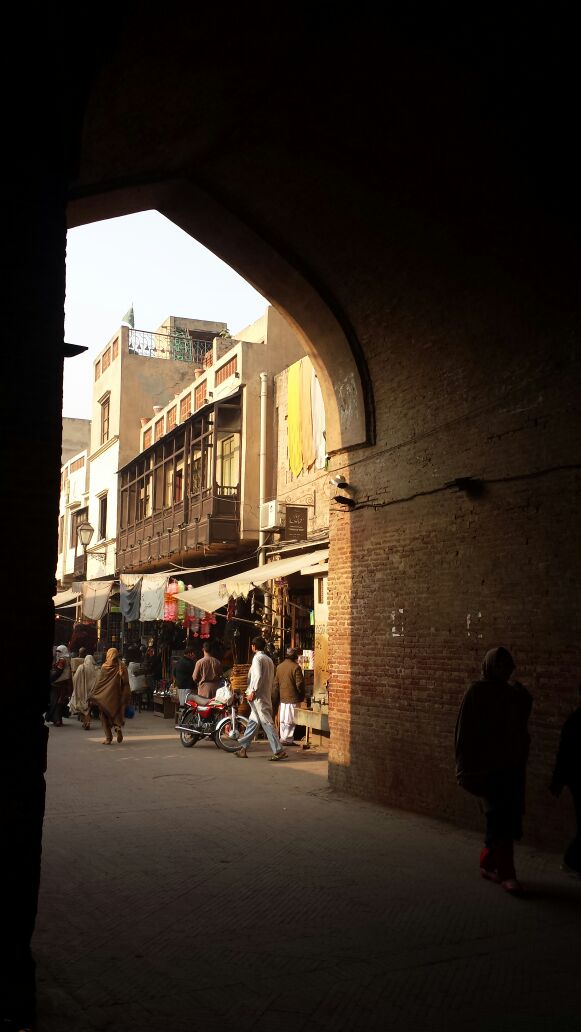
Inside the Delhi Gate which opens up to a bustling bazaar within the walled city. Photo credits: Romila Kareem
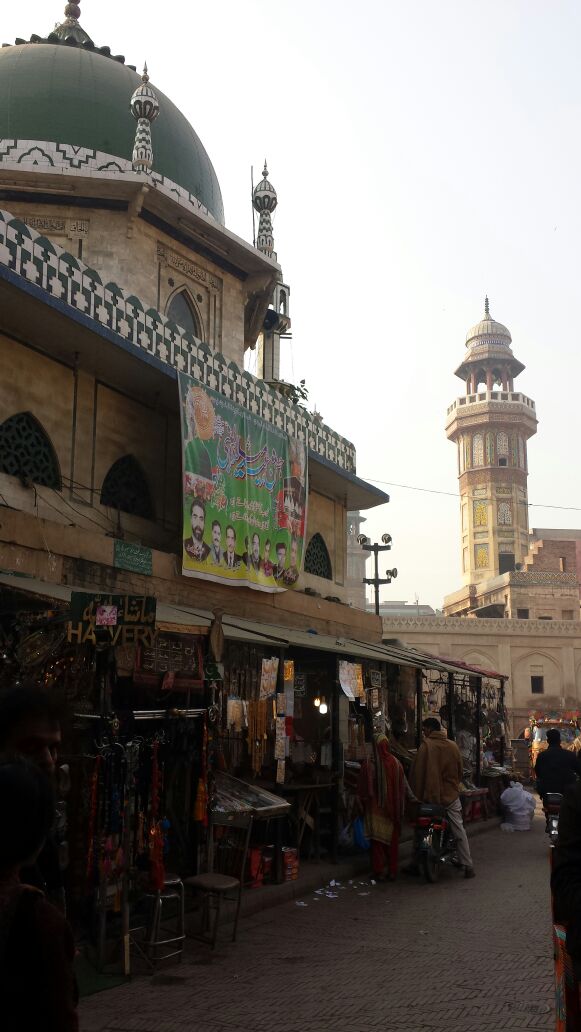
Approaching the mosque
Hakim Shaikh Ilm-ud-din Ansari is credited for its construction. He was the governer or Wazir of Punjab at the time and hence the name.
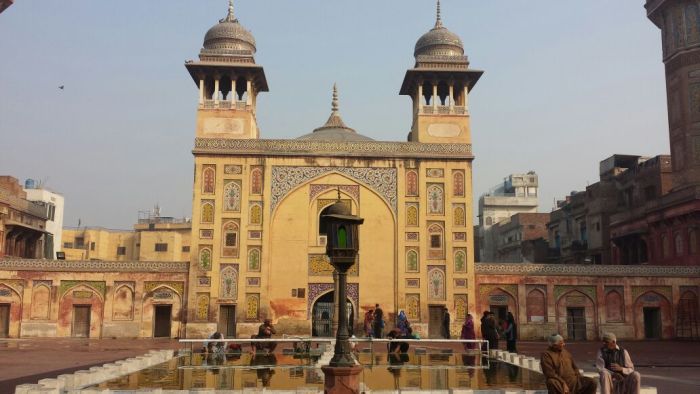
Once you pass the portal and octagonal chamber you are led into the mosque’s central courtyard. The courtyard is approximately 160 feet by 130 feet, and contains high arched galleries surrounded by a central brick paved courtyard. These features make it very similar to Persian architecture.
One of the most mesmerizing experience was to see the mosque reflected in a pool aligned infront of it centrally. This is used for ablution and it measures 35 feet by 35 feet.
The courtyard is surrounded on four sides by 32 khanas which are basically small study cloisters for religious scholars. The mosque’s four 107 foot tall minarets are located in each corner of the courtyard.

One of the four 107 foot tall minarets
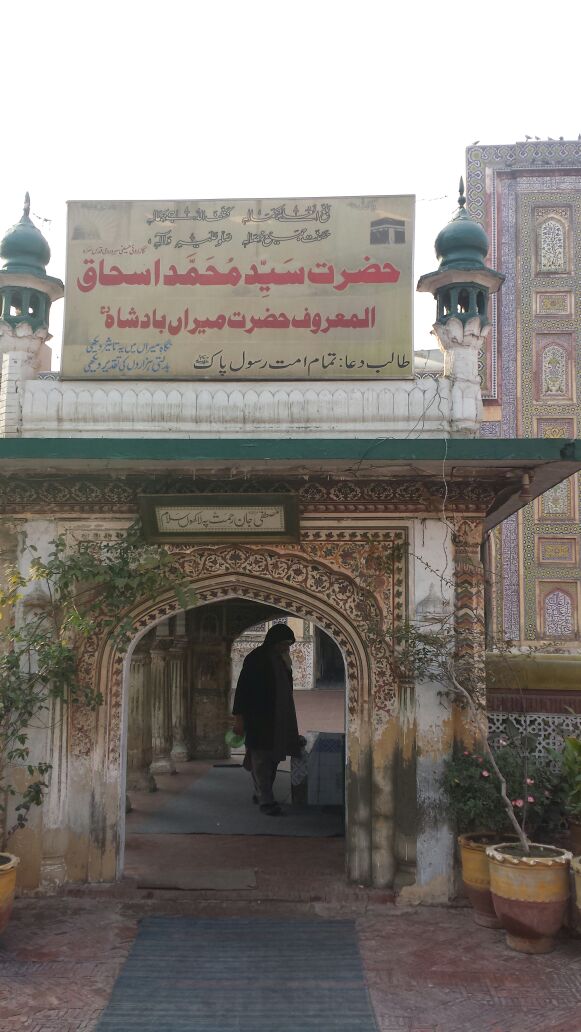
Furthermore the same courtyard features a crypt which contains the tomb of the 14th century Sufi saint Syed Muhammad Ishaq Gazruni, also known by the name Miran Badshah.
Mughal Architecture was flourishing during the reign of Shah Jehan and it was during this time that the mosque’s construction began, in 1634. Quick to gain political significance as it became the official hub for the Emperor’s Friday congregational prayers.
I recall studying previously in one of my history of architecture classes about the Mosque of Isfahan and the role of the surrounding bazaars around it. I find the location of the Wazir Khan mosque playing a similar integration within the urban fabric it belonged too. It is located in the center of the city achieving all major routes and bazaars to be linked to it at right angles.
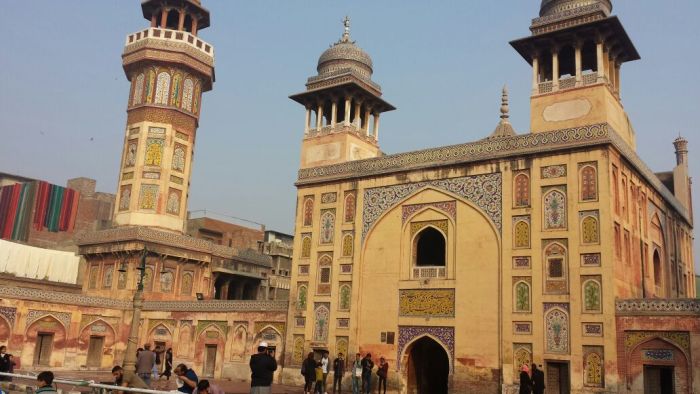
You enter the mosque through a large iwaan which is preceeded by wazir khan chowk which is rather like a town square.

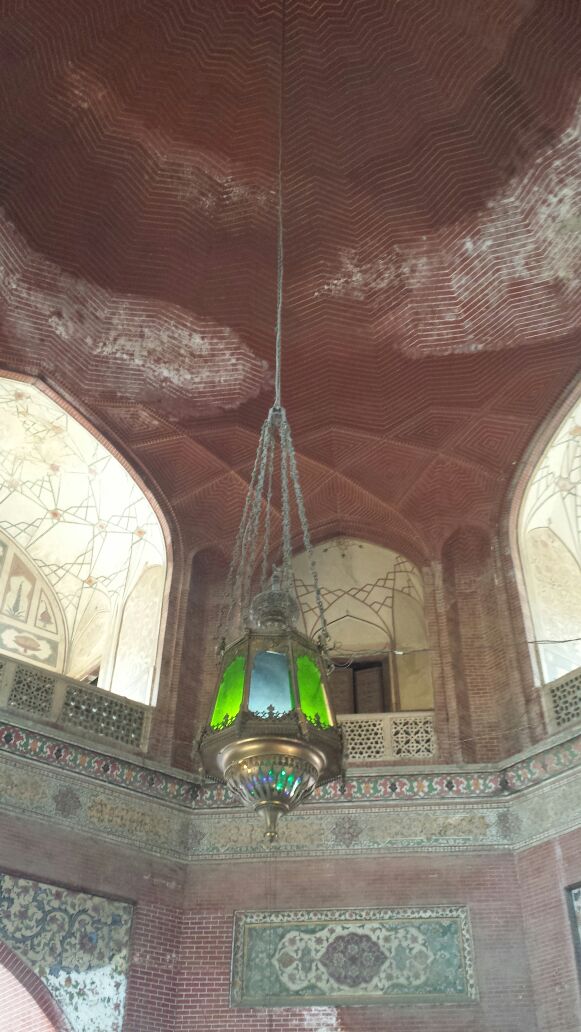
Entrance through the small portals leads you into this octagonal space which was the centre of the ‘Calligraphers Bazaar’.
If I were to point out the most captivating feature of the mosque, it would be the ornate tile work which is called Kashi Kaari. Along with this you see multiple mughal frescoes also painted on the surfaces. 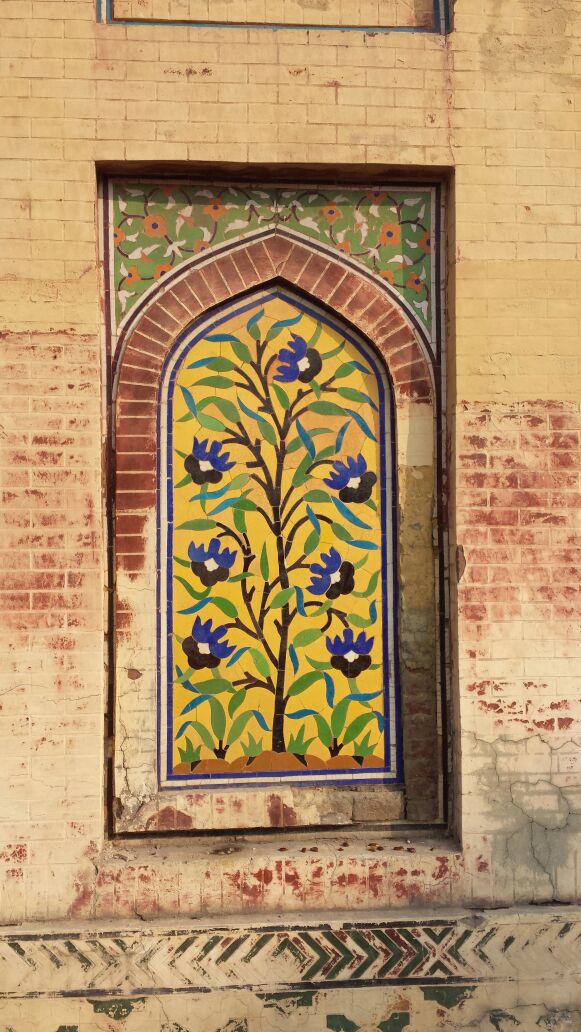


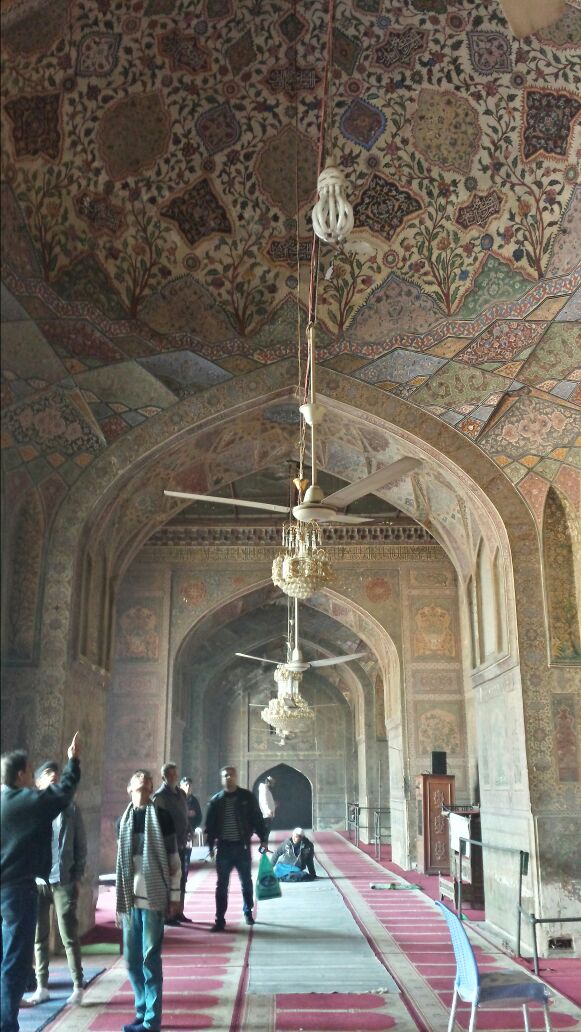

Other features include the muqarnas which seem to flower themselves, having been painted with floral patterns within.
The visit was definitely a fruitful one and was paired by a visit to the Shahi Hammam which was in close proximity to this mosque (another blog post for this later).
I was a little devastated at having forgotten to bring my SD card for the DSLR to get more high resolution photographs but it wasn’t a complete loss I hope.
Googe Arts and Culture has done some excellent coverage of the entire place with walkthroughs and everything so everyone who can’t go physically (which is what you should do!) can check that out.
https://www.google.com/culturalinstitute/beta/exhibit/YALCRbBD4YTAJA
 Radhya Kareem